What to Expect in a Pleasure Waves Qi Gong Class
Both practices share the same roots in Chinese medicine, and both involve slow, flowing movement. But Tai Chi is a long, choreographed form that can take months to learn, while Qi Gong is generally shorter, simpler, and more varied — making it accessible from your very first class.
Tai Chi: A Beautiful, Learned Form
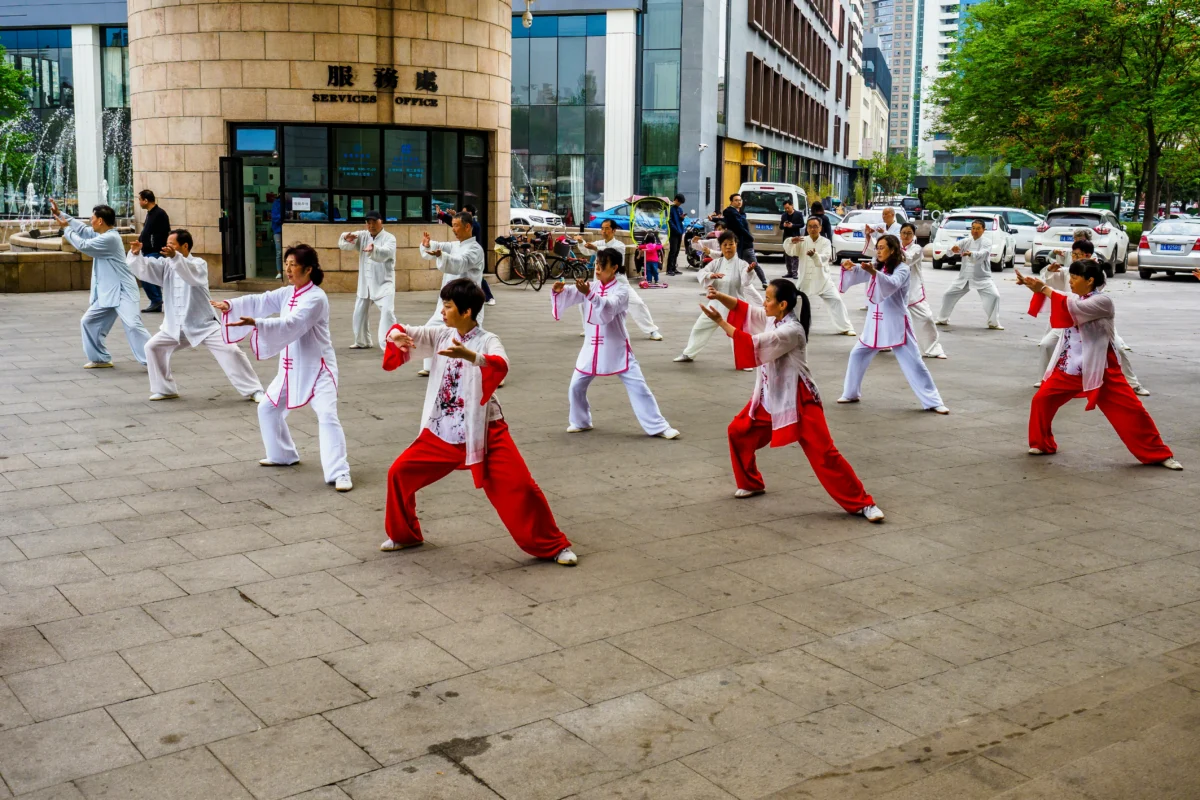
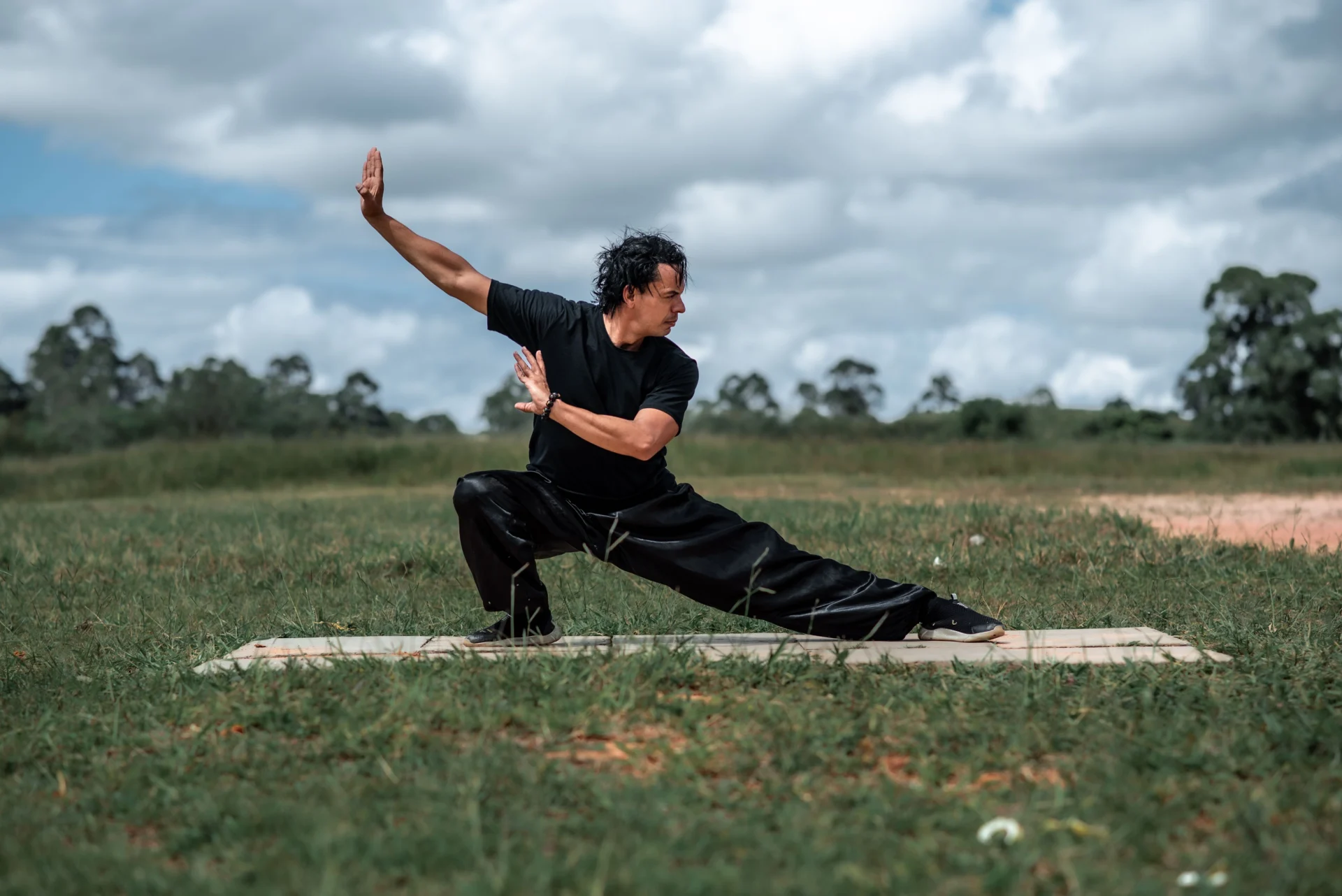
Tai Chi is well known because of its high visibility, with practitioners spotted in public spaces throughout the world. The practice is visually beautiful, even mesmerising, as you watch the gentle flow of one movement into the next. Tai Chi involves stepping, so the whole thing can look very dance-like as the practitioner moves through their deeply embodied routine.
Tai Chi is a learned, choreographed form that can be as long as 60 minutes. Once learned, the routine is repeated over and over, often daily
.
Qi Gong: Accessible from Day One
Qi Gong as practiced by Holden QiGong can look similar to Tai Chi to the casual observer. Lee Holden developed a formula that has demystified the practice and made it readily accessible to Western lifestyles.
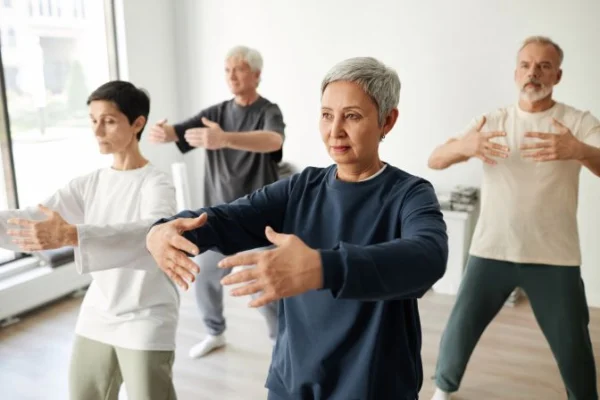 One of the key differences is the variety of movement Qi Gong offers. Rather than one long fixed routine, the teacher draws on a range of techniques — sometimes referred to as “alchemy” in this tradition — to create a variety of classes, each with its own purpose. Practitioners consistently report a stronger, more embodied sense of wellbeing when they follow the formula regularly. This kind of varied movement is also widely considered supportive of healthy aging.The main difference, then, is complexity. Tai Chi’s long, choreographed forms can take months to learn. Qi Gong’s movements are shorter and simpler, so many people who find Tai Chi intimidating discover that Qi Gong is exactly what they’re looking for.
What happens in a Pleasure Waves Qi Gong class
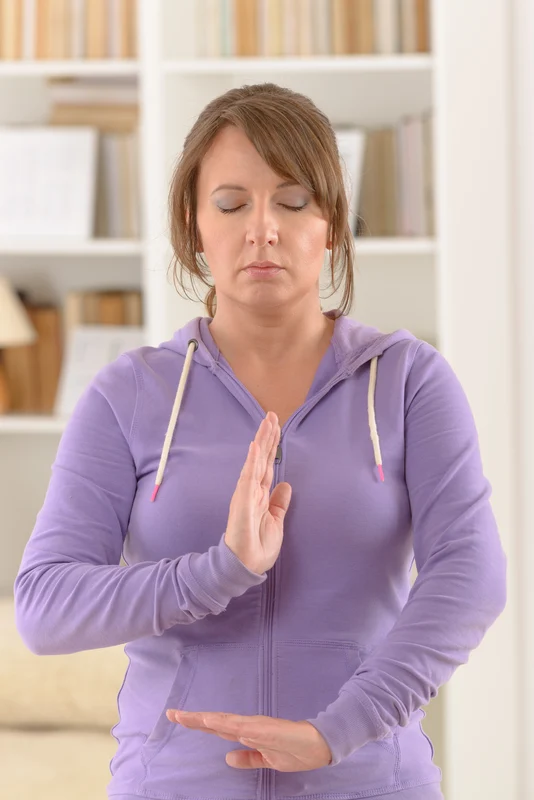
At Pleasure Waves, our Qi Gong classes follow Lee Holden's approach and typically begin with a series of activations. These include breath work, stretching to release lines of tension, purging (clearing old, stagnant energy), and balance work.
This set of activations is the perfect lead-in to the flows and standing postures that follow — movements that are standing meditations coupled with postural alignment work. The whole class is built around Five Element theory and focuses on bringing flow into the meridians, the rivers of energy in the body mapped by Chinese medicine.The class closes with a seated meditation, often involving visualisation — a more active form of meditation than a yoga-style Shavasana.
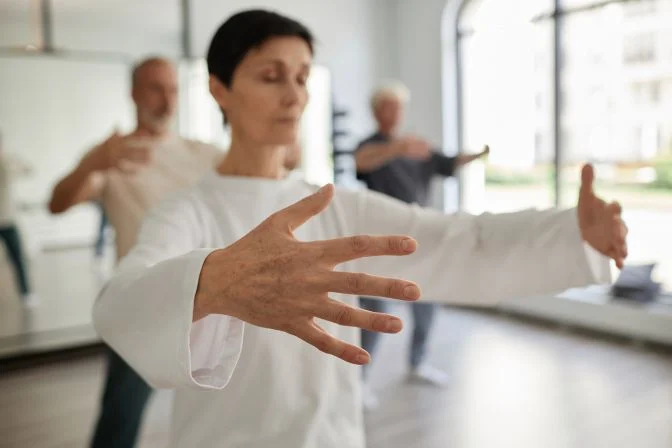
What Qi Gong and Tai Chi Have in Common
Both Qi Gong and Tai Chi are focused on energy. Qi and Chi are different versions of the same word and are both pronounced the same. The first is the way the Chinese spell the word and the second is from Harvards lexicon. Qi/chi translates as energy. Gong translates as work or practice. Tai translates as supreme or greatest.
Qi Gong means energy work.
Tai Chi means supreme energy.
Both practices bring a sense of overall balance, ease, and flow into the body — and both require little to no equipment while supporting fitness and longevity over time.

Which one is right for you?
While Qi Gong is less well known than Tai Chi, it's becoming increasingly popular. It's an accessible way to venture into a movement practice that brings an overall sense of wellbeing, with the added benefit of increased fitness and balance.
Click here to book your online class today!